

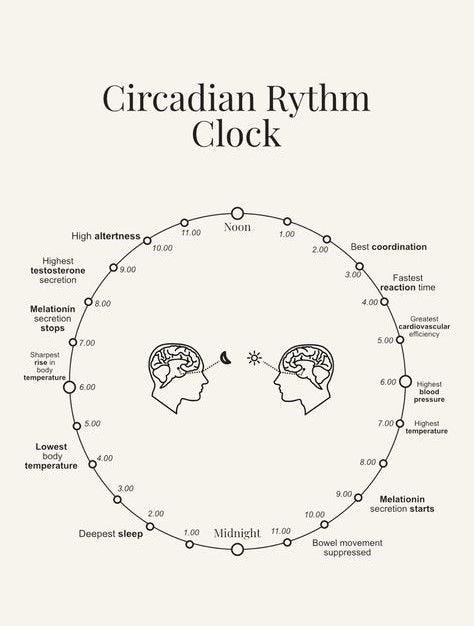
From the dawn of life, every being on Earth has been bound by a rhythm older than memory itself—a silent, steady pulse that dictates the rise and fall of energy, the ebb and flow of life. This rhythm, the Circadian rhythm, is more than just a biological clock; it is the heartbeat of existence, an ancient song that echoes through every cell, every heartbeat, and every breath.
But what is it, truly? Beyond the science, beyond the mechanisms, lies a profound wisdom. The Circadian rhythm is the dance between light and darkness, a cosmic ballet where the universe itself plays the role of conductor. It’s a cycle that mirrors the turning of the Earth, the waxing and waning of the moon, the flow of tides, and the seasons' change—a dance that invites us to align with the natural world, to move in harmony with the forces that sustain us.
The Clock Within
Within each of us resides a master clock, hidden deep in the brain, in a place called the suprachiasmatic nucleus (SCN). This small cluster of neurons, buried within the hypothalamus, is the keeper of time, ticking away in perfect synchrony with the world outside. But this clock does not merely measure time—it creates it.
As the first light of dawn brushes across the eyelids, it triggers a cascade of events within the SCN. The message is clear: it’s time to wake. This is the moment the body has been waiting for, preparing all night long for the day ahead. Cortisol levels begin to rise, infusing the body with energy. Blood pressure increases, body temperature rises, and the mind sharpens, ready to engage with the world.
This is not just biology—this is wisdom. The body knows that daylight is precious, that the sun’s presence marks the time for action, for creation, for growth. We are at our best when we move in time with this light, when we honor the day’s beginning and allow ourselves to be fully present in its unfolding.
A Day in Harmony
As the day progresses, the Circadian rhythm continues to guide us through its natural cycles. Mid-morning is a peak time for alertness, a period when our cognitive functions are at their sharpest. This is the time to tackle the hardest tasks, to think deeply, to create. As the sun climbs higher, our energy sustains, but subtly shifts—by early afternoon, we may feel a dip, a call to rest, a moment of quiet reflection.
This, too, is wisdom. The rhythm recognizes the importance of balance, of not pushing endlessly but allowing for moments of pause. The early afternoon lull is a time to recharge, to breathe, and to prepare for the second half of the day.
By late afternoon, the rhythm brings another surge, a final burst of energy as the sun begins its descent. This is the time for physical activity, for movement, for engaging with the world in a tangible way. It’s a time to connect, to collaborate, to bring the day’s work to completion.
The Descent into Night
As the light fades, the SCN begins to slow the tempo. The release of melatonin signals the approach of night, the time for rest. The body cools, metabolism slows, and the mind begins to quiet. This is not just the precursor to sleep—it is the body’s way of returning to the earth, of grounding itself, of preparing to enter the sacred space of night.
Sleep is not merely the absence of wakefulness. It is a time of renewal, of healing, of integration. During sleep, the body repairs itself, the mind processes the day’s experiences, and the soul rests. The wisdom of the Circadian rhythm is in recognizing that night is as important as day, that rest is as crucial as action, that being is as vital as doing.
When the Rhythm Falters
In our modern world, the natural rhythm is often disrupted. Artificial lights, screens, and the constant demands of a 24/7 society can push us out of sync with the Circadian rhythm. When we force our bodies to move against the natural flow, we create dissonance—fatigue, stress, and a deep sense of imbalance.
Yet, there is a deeper lesson here. The wisdom of the Circadian rhythm is not just in its structure, but in its flexibility, in its capacity for recalibration. When we stray from the path, the rhythm invites us back, gently guiding us toward harmony. eating at regular intervals, honoring the need for rest and sleep.We can restore our connection to the rhythm by embracing the natural cycles—waking with the sun.
The Rhythm of Life
Ultimately, the Circadian rhythm is a reminder of our place in the universe, of our connection to something larger than ourselves. It is a rhythm that ties us to the earth, to the seasons, to the very fabric of life. When we align with this rhythm, we find balance, health, and a deep sense of peace.
The Circadian rhythm teaches us that life is not a race but a dance—a dance of light and shadow, of day and night, of activity and rest. It is a rhythm that, when followed, leads to a life lived in harmony with the world around us and within us. And in this dance, we find the wisdom to live fully, to move gracefully, and to be at one with the rhythm of life.
I spoke about that topic in my
Daily system of habits.
Good piece,
Those rhythms are essential for mental health, hormone production, and balancing,
healthy weight, energy output, and immune system - just to name a few.
Thnx dear i just loevd it as a musician! BRAVISSIMO 👏👏👏